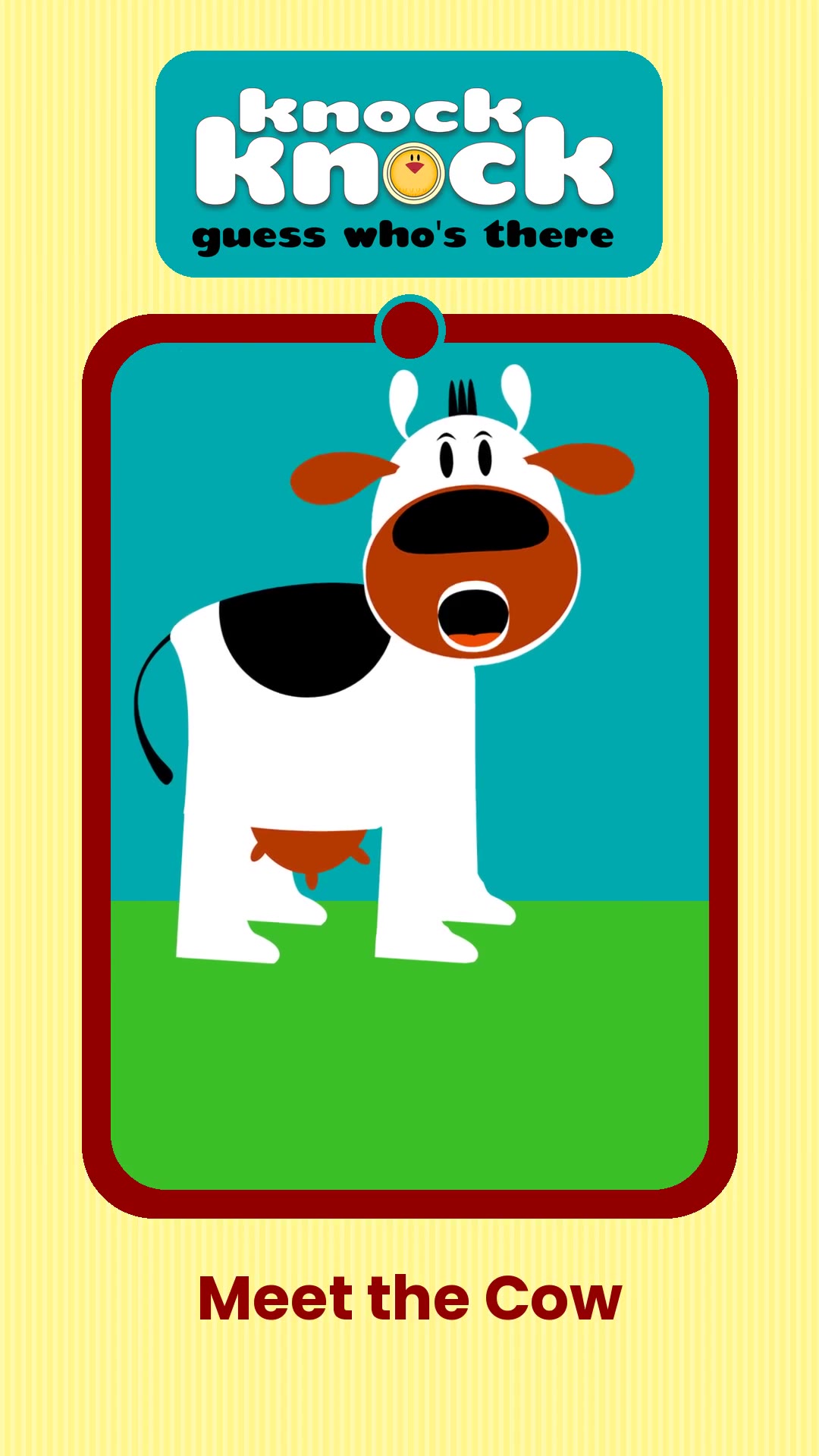
Why does the dog wag his tail?
A 21-second animal fact for toddlers, told by our dog – slow wag, fast wag, super-duper-fast wag – with his real woof.
“When I'm happy, it wags.”
The grown-up version: a dog's tail is a mood meter. A slow, loose wag means relaxed and content; a fast wag means excited; and when someone the dog loves walks in, the tail goes super-duper fast – and, researchers found, swings a little more to the right side (Quaranta et al., Current Biology, 2007). Bonus fact for the next clip: dogs hear tiny sounds from much farther away than we do.
Try it at home
- 1Knock on the table. “Knock knock… who's there?”
- 2Let your child guess. “Woof!” Then ask: “Is the dog happy? Show me the tail!”
- 3Wiggle a hand behind your back: slow… fast… super-duper fast. Toddlers will copy you – and that copying is how speech starts, too.
Why a woof is a big deal
“Woof” is one of the first sounds many toddlers say on purpose. In Knock Knock every door opens with the animal's real sound – a real dog, not a cartoon bark – so the woof your child practises is the real thing.
In the app
The door knocks, your child guesses who's hiding, the door opens – and the dog barks. Since version 2.0 he also copies your child's faces in the Magic Mirror and answers back in his own voice. Everything runs on your device: nothing is recorded or sent anywhere.

5 animals free · one-time unlock for all 18 · no ads, no subscriptions · Android coming soon.